Cardano News

Explore the stories below for curated news, stories, and inspiration from within the Cardano ecosystem.

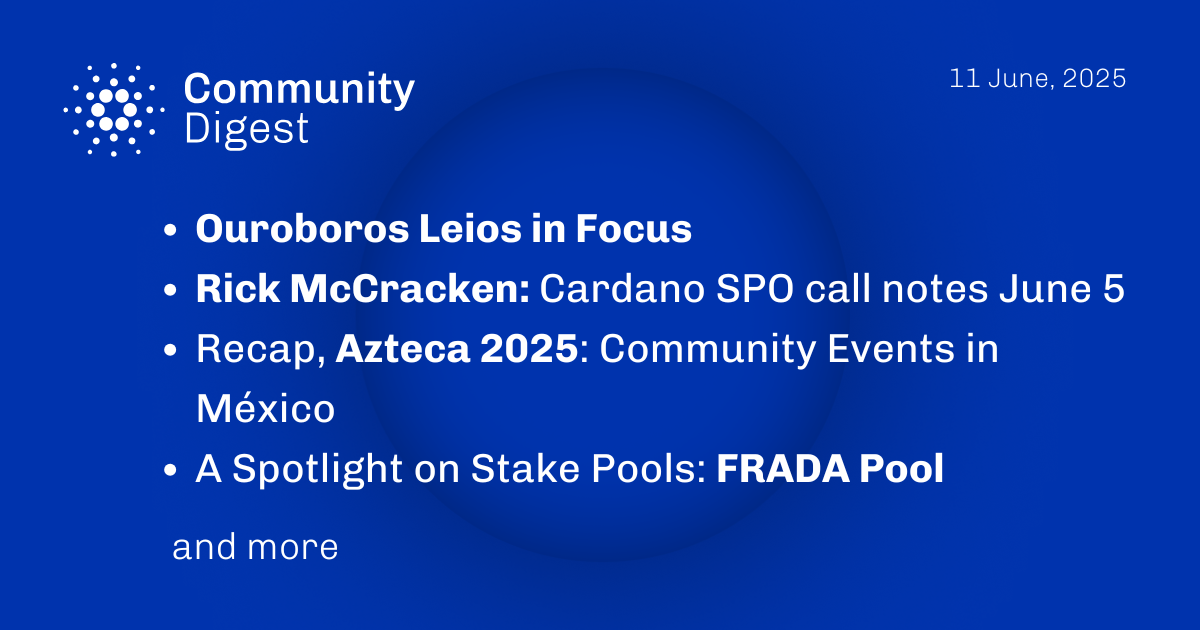
Community Digest

Cardano Foundation
Not-for-profit organization

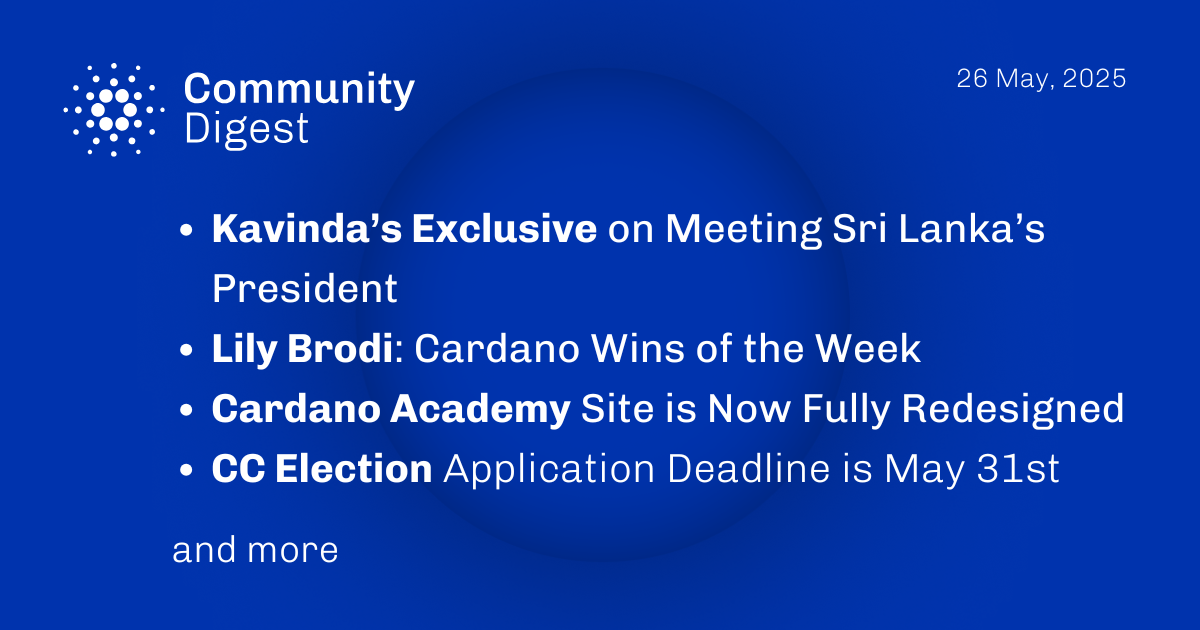
Cardano Buidler Fest #2 is scheduled for April 24–25, 2025, in Da Nang, Vietnam. A key proposal by Andrew Westberg suggests reducing the treasury tax rate from 20% to 10% to adjust fund allocation. Additionally, Intersect MBO has released draft budget proposals for feedback, covering Research and Growth and Marketing strategies to encourage community input.

community digest

Inter-Blockchain Communication

Cardano Foundation
Not-for-profit organization

This installment of the Cardano Developer Office Hours explores the Cosmos-Cardano Inter-Blockchain Communication (IBC) bridge project. The session provides an overview of the architecture, current development, and key components driving the project. Topics include the IBC protocol, blockchain interoperability, and the integration of Cosmos SDK with Cardano. A live demo showcases how to send messages between the Cosmos network and a local Cardano node. The session also covers real-world use cases like token transfers, cross-chain swaps, and more.

Weekly Development Report
Input Output Global
Global IO holding

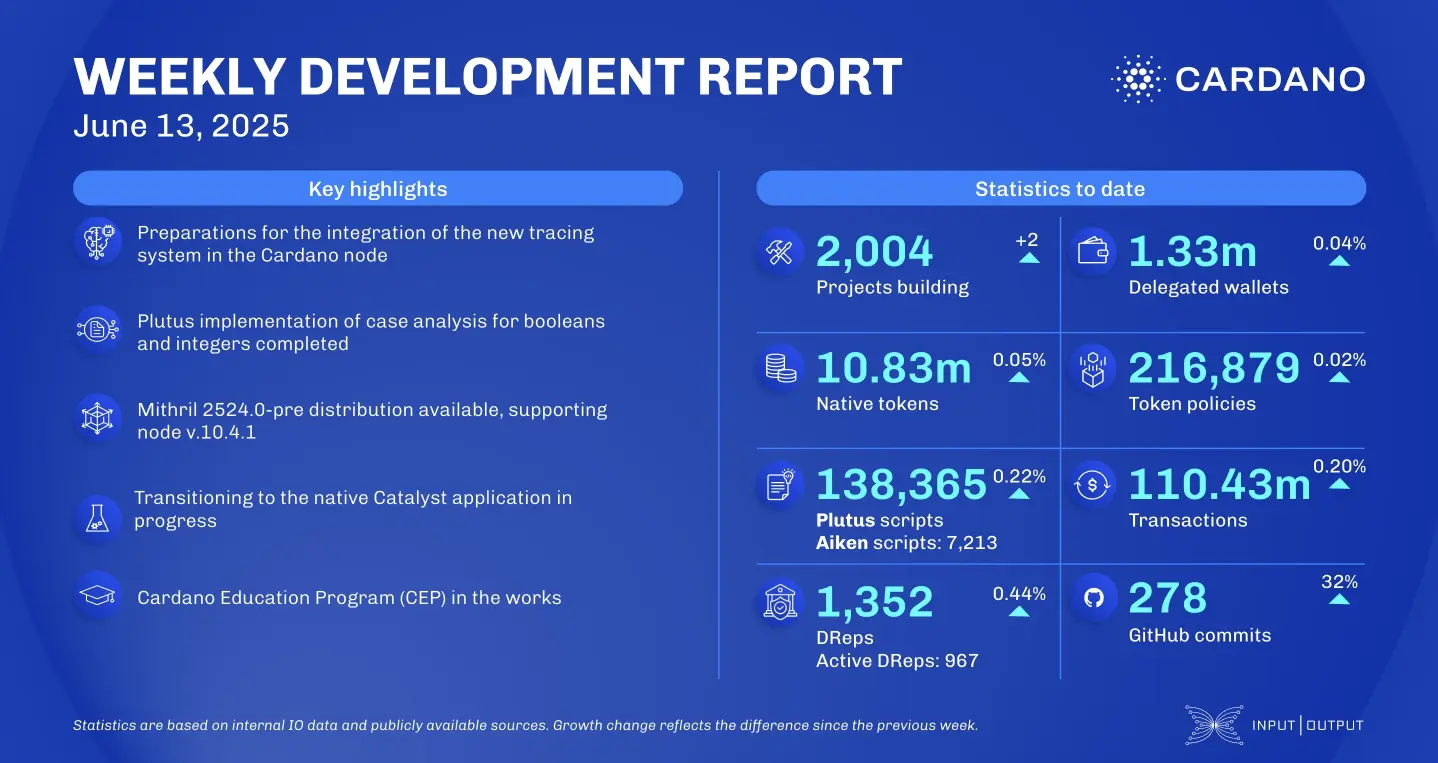
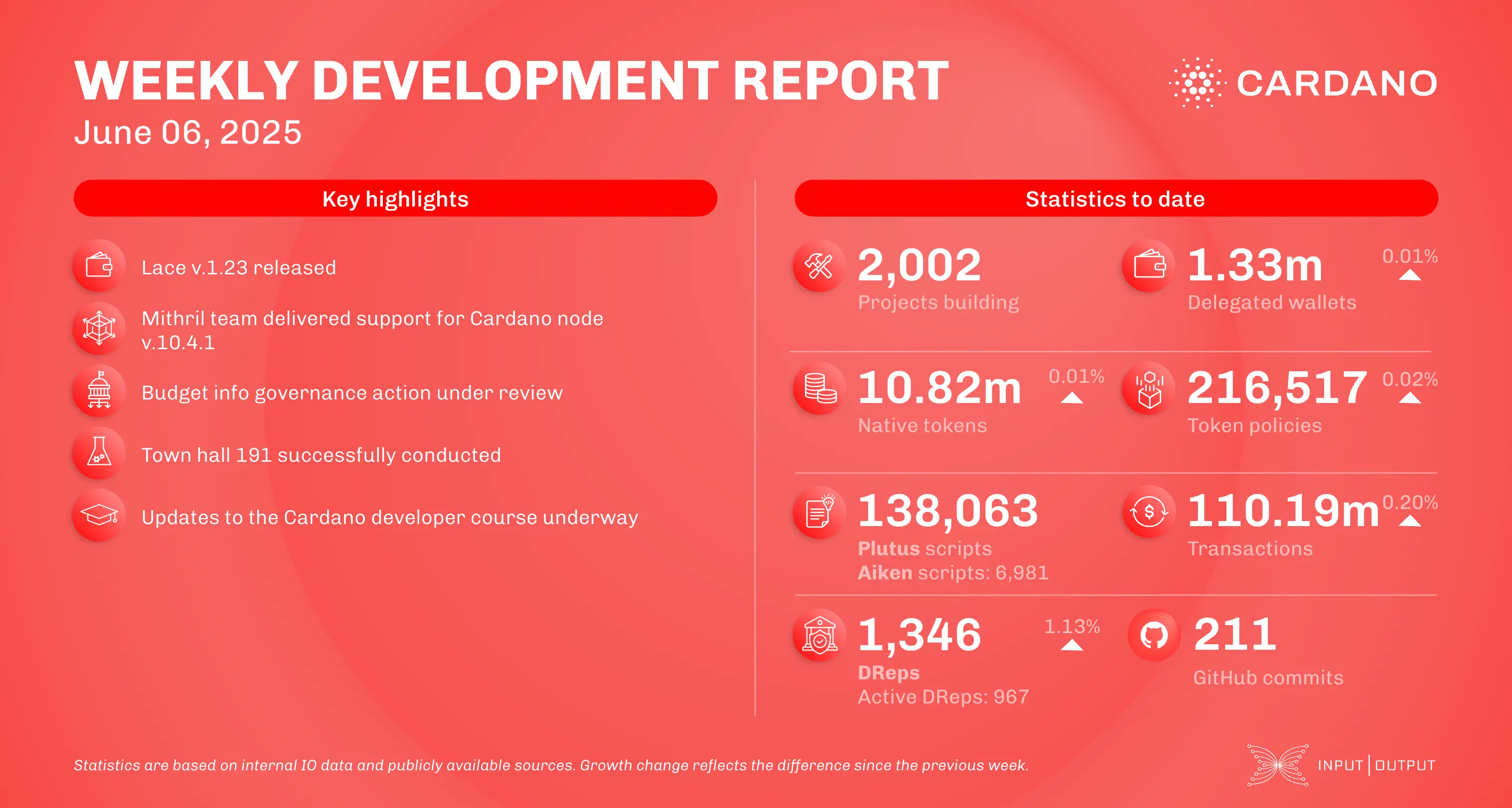
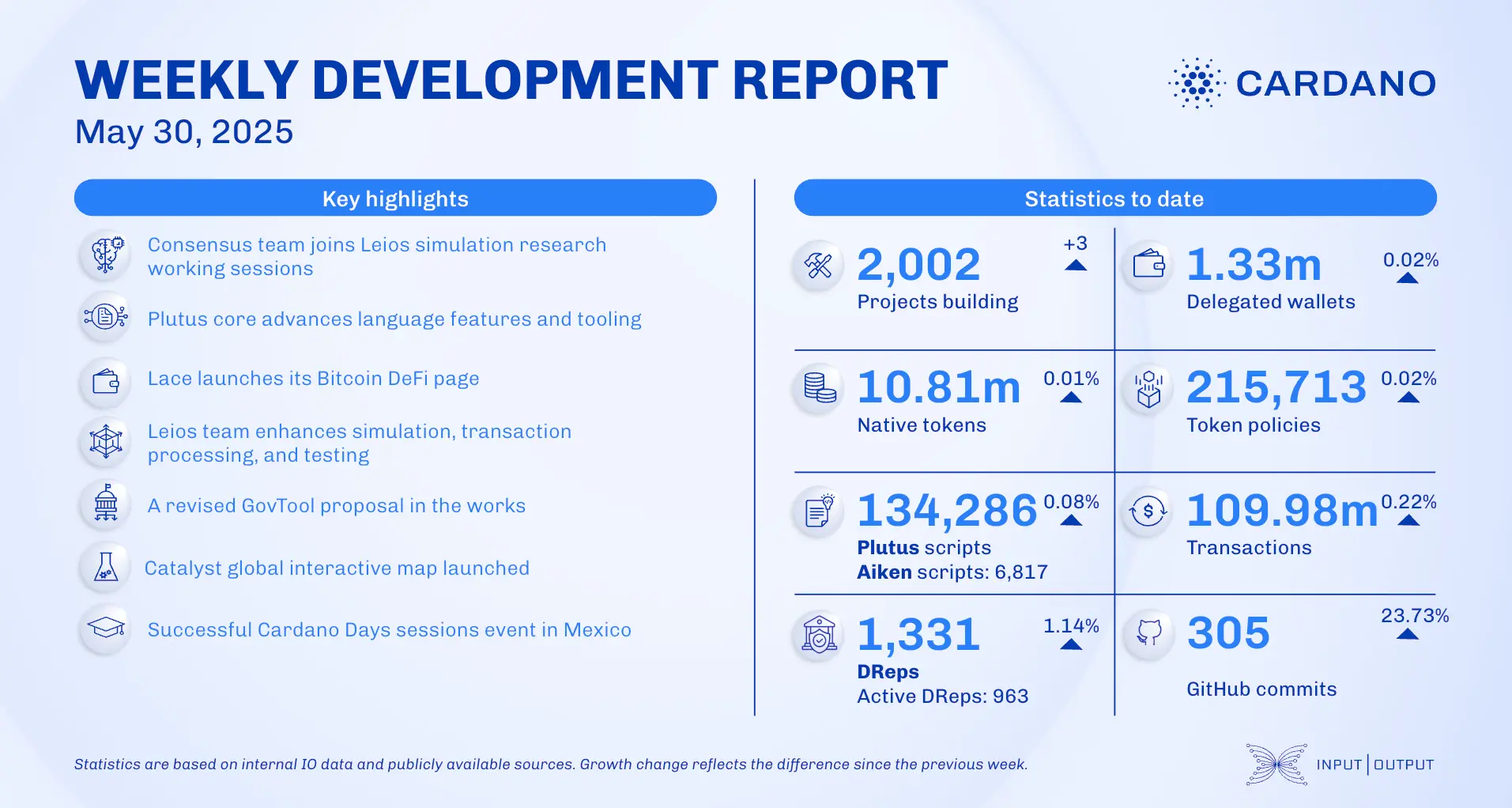
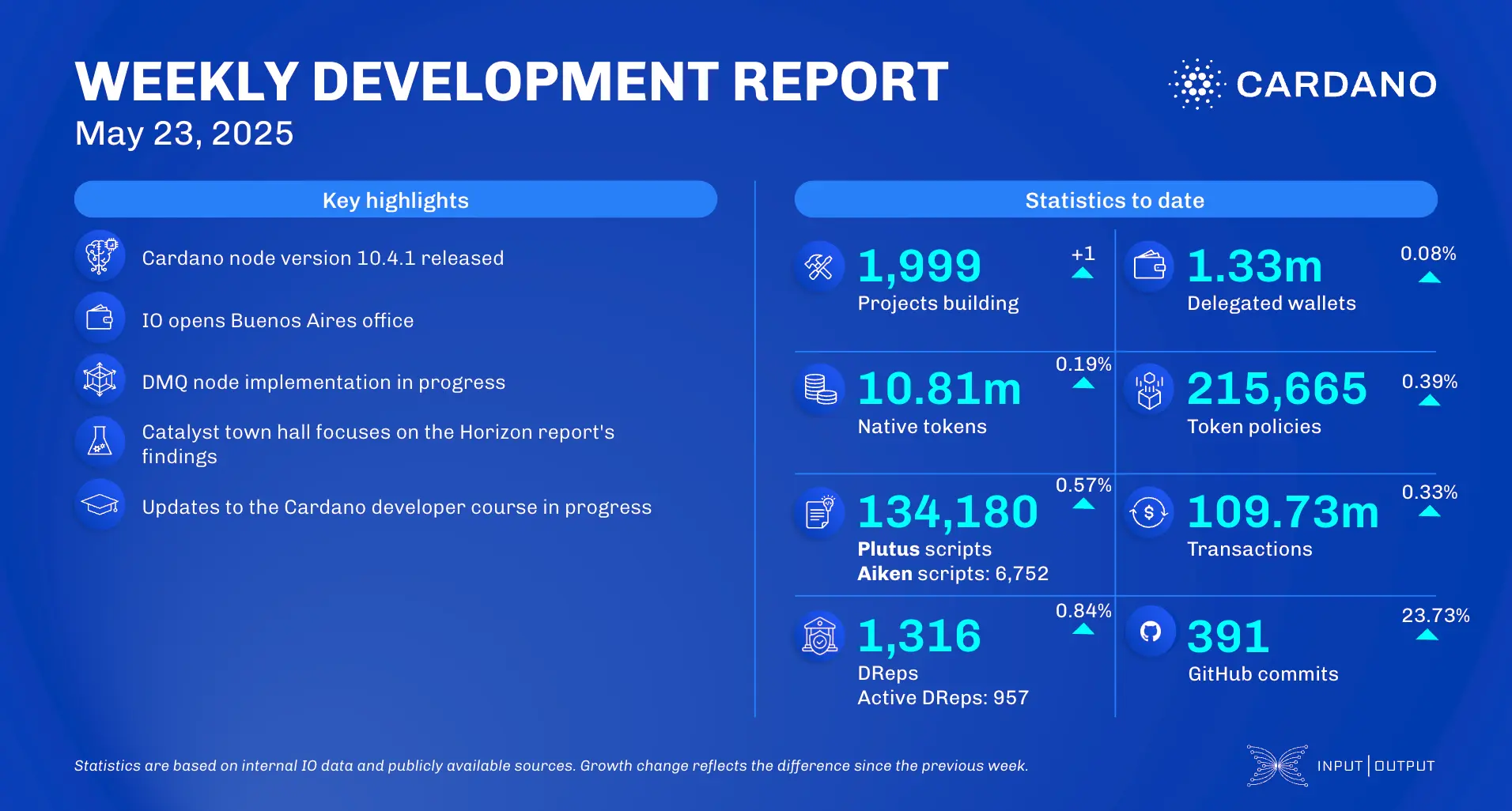
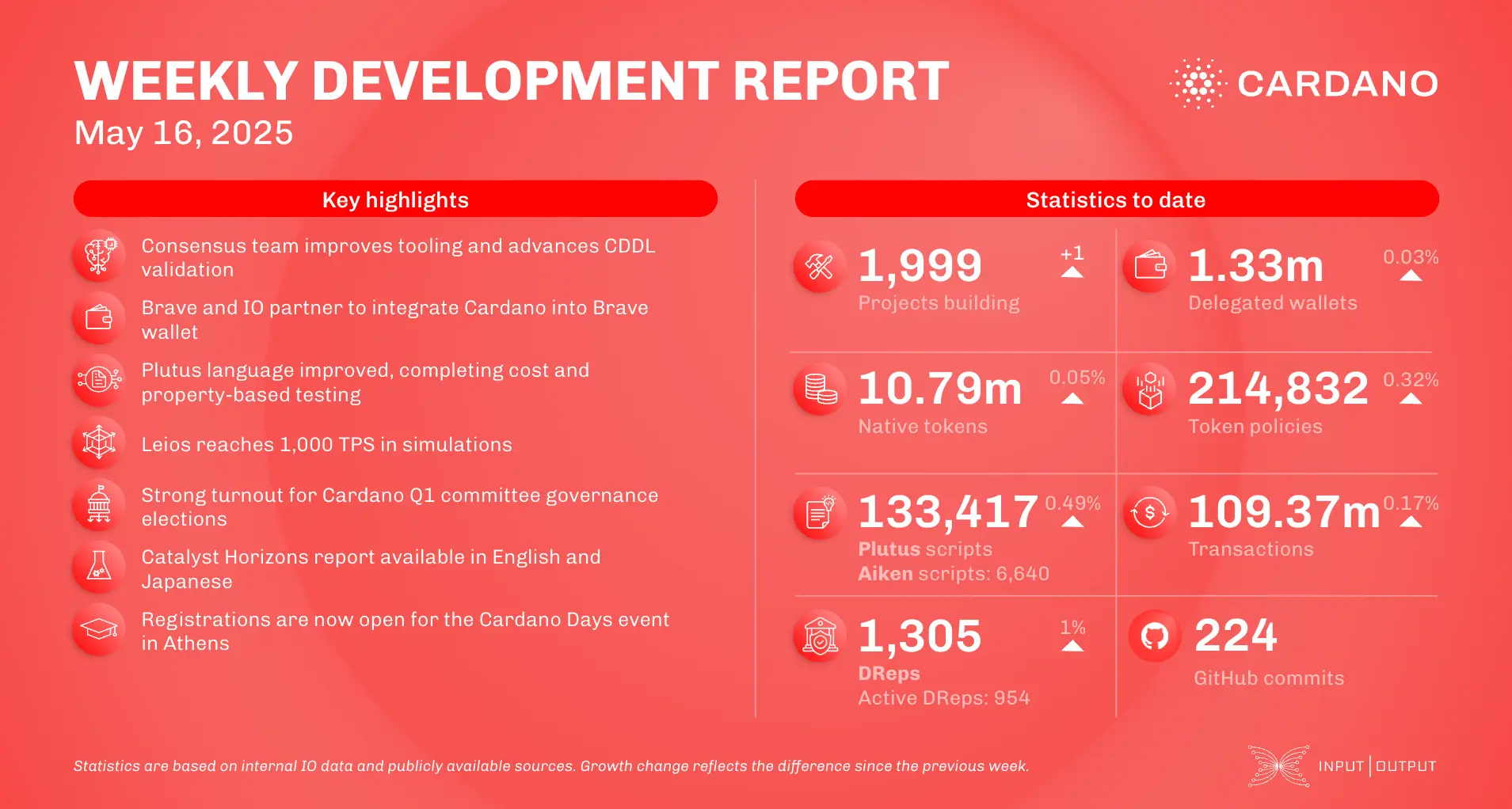
The ecosystem has reached 1,985 projects, 10.68 million native tokens, and 106.19 million transactions. The ledger team optimized Plutus script computations, reducing memory usage for better performance. Mithril activated the 'Pythagoras' era at epoch 539, advancing incremental database certification. Leios focused on cryptography benchmarking, while the interim council voted to officially adopt the Cardano Constitution.

weekly development report

Serial Monopoly on Blockchain with Quasi-patient Users

Cardano Foundation
Not-for-profit organization

The Cardano Foundation's recent research paper, "Serial Monopoly on Blockchain with Quasi-Patient Users," co-authored with IOG Research, examines transaction fee mechanisms and their influence on validator incentives. Accepted for presentation at the 29th International Financial Cryptography and Data Security 2025 conference, the study introduces a model bridging impatient and patient users, termed "quasi-patient" users. This approach analyzes how users' varying tolerance for transaction delays impacts fee strategies and blockchain security, offering insights into optimizing transaction fee mechanisms to balance cost efficiency and timely inclusion.

weekly development report

Weekly Development Report

Input Output Global
Global IO holding

The network has benchmarked node v.10.2, alongside UTXO-HD and Genesis performance updates. The consensus team removed EBBs and fixed block replay issues, while the Plutus team rebranded Plutus Tx to Plinth and refined the script context API. Hydra v.0.20.0 improved memory usage, and Mithril prepared for the Pythagoras era at epoch 539. Additionally, the Leios team enhanced efficiency by reducing certificate sizes.

weekly development report

Java Implementation on Rosetta

Cardano Foundation
Not-for-profit organization

This 13th installment of the Cardano Developer Office Hours is presented by Thomas Kammerlocher, Senior Full Stack Developer at the Cardano Foundation. Thomas discusses the Java implementation of Rosetta, a tool developed by Coinbase for exchanges to integrate with Cardano. Rosetta simplifies multi-chain support with its blockchain-agnostic API, and the transition from TypeScript to Java enhances performance and reduces resource consumption. Upcoming updates include support for staking rewards tracking, off-chain data integration, and more improvements to scalability and efficiency.

Community Digest

Cardano Foundation
Not-for-profit organization

Insights into decentralization post-Plomin hard fork and a comprehensive guide to stablecoins are featured. Project Catalyst has released its 2025 roadmap, while an interview with the FluidTokens CTO explores Bitcoin DeFi and liquidity. Updates also include EMURGO's latest developments and the 2025 Ecosystem Guide, encouraging engagement in ongoing governance actions.

community digest

Weekly Development Report

Input Output Global
Global IO holding

The January 31, 2025, development report highlights the successful implementation of the Plomin hard fork, marking the completion of the Conway ledger era. The ledger team made minor improvements, including removing dependencies and optimizing data structures. The Lace team released version 1.19.0, introducing a DApp explorer and performance enhancements. The Mithril team progressed on incremental certification of the Cardano database and prepared for the upcoming 'Pythagoras' era transition. The Leios team advanced both Haskell and Rust implementations to enhance performance and simulation fidelity.

weekly development report

Chang upgrade completed - Plomin hard fork achieved!

Intersect
Member based organization

On January 29, 2025, Cardano transitioned to full community governance with the Plomin hard fork, approved by stake pool operators and the interim constitutional committee. This historic event marks the first community-driven hard fork in blockchain history, stemming from CIP-1694 developed over two years with extensive community input. Ada holders can now propose and vote on governance actions directly or through delegated representatives (DReps). Post-Plomin, staking rewards continue as usual; however, withdrawing them requires delegation to a DRep or selecting a predefined option. This milestone signifies a new era of decentralized decision-making for Cardano.

community digest

Roundtable Talk: Celebrating Plomin Hard Fork

Cardano Community
Individuals interested in or actively supporting the Cardano blockchain

A Roundtable Talk on January 30, 2025, celebrated the Plomin Hard Fork, a milestone marking the full realization of decentralized governance in Cardano's Voltaire era. Key stakeholders gathered to discuss the significance of this achievement and reflect on the network's journey from Byron to Voltaire. The session explored the new opportunities for community-driven innovation and ecosystem growth unlocked by the decentralized treasury and on-chain governance framework.