Chuyển đến nội dung chính
Cardano News

Explore the stories below for curated news, stories, and inspiration from within the Cardano ecosystem.

Một bài viết được gắn thẻ "Governance"

On-chain governance, Project Catalyst, Intersect, and stake pool operations.

Xem tất cả thẻ

Dijkstra roadmap details hard fork windows as CC update ratifies
Intersect
Member based organization

Intersect detailed the Dijkstra era node roadmap, placing potential hard fork enactment between December 5 and January 4 with a high-confidence window from February 24 to March 26. The Constitutional Committee update ratified with 71.95% DRep and 56.54% SPO support, and the newly elected committee takes seats without a gap in oversight. The Board Election opened applications for two member-elected seats, and the Constitutional Amendment Portal added threaded discussions, a drafts area, and co-author crediting.
intersect weekly update banner

The Constitutional Amendment Portal: giving Cardano's Constitution a way to grow

Intersect
Member based organization

The Constitutional Amendment Portal is live for alpha testing at cap.intersectmbo.org, giving the community a structured home for proposing and refining changes to the Cardano Constitution. Users can highlight a precise passage of the Constitution, submit a Constitutional Amendment Proposal or raise an issue, and follow each proposal through its lifecycle. Wallet connection uses a stake address as identity, with no account, email, or password required.

Constitutional Amendment Portal

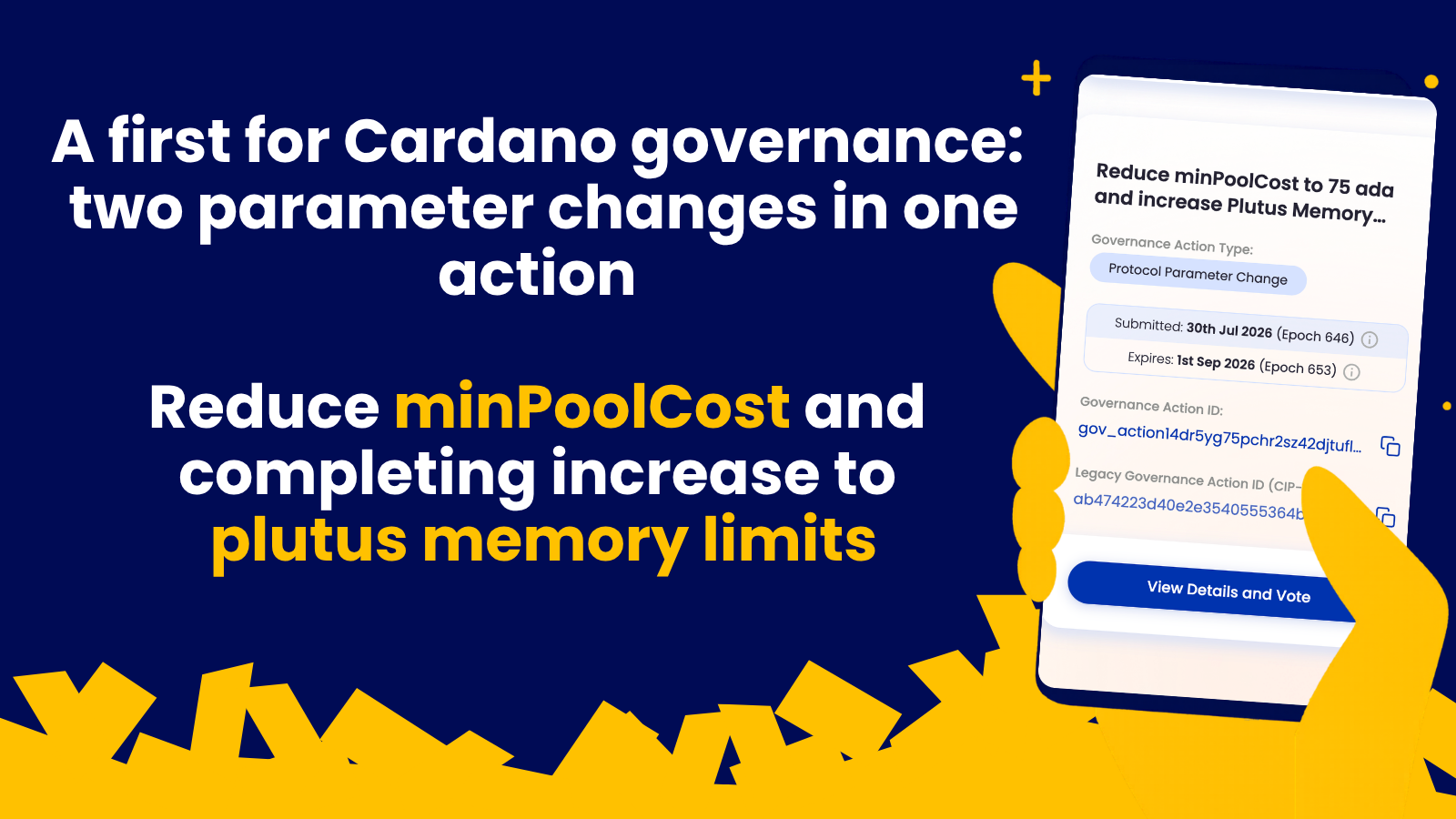
Lowering minPoolCost and completing smart contract capacity increases

Intersect
Member based organization

Intersect submitted, on behalf of its Parameter Committee, a parameter update governance action combining a minPoolCost reduction from 170 to 75 ada with the second part of a 25% increase to Plutus memory limits. Ratification requires support from both DReps and stake pool operators. The lower fixed fee gives small pools breathing room as block rewards decline, while the accompanying memory increase, once ratified, would ease contract deployment for developers.

Lowering minPoolCost and completing smart contract capacity increases

Constitutional Committee Election 2026: Real Talk with the Candidates

Cardano Community
Individuals interested in or actively supporting the Cardano blockchain

A Cardano Community roundtable hosted three Constitutional Committee candidates to discuss what serving on the Committee involves as the 2026 election gets underway. Moderated by the Cardano Foundation governance lead, the session moved past a traditional candidate introduction to examine the practical realities of the role, including workload, transparency, constitutional interpretation, collaboration, and Committee fatigue. Candidates also addressed whether the current incentive model is sufficient to sustain long-term participation, giving DReps and observers a fuller view of the responsibilities and challenges ahead of the vote.

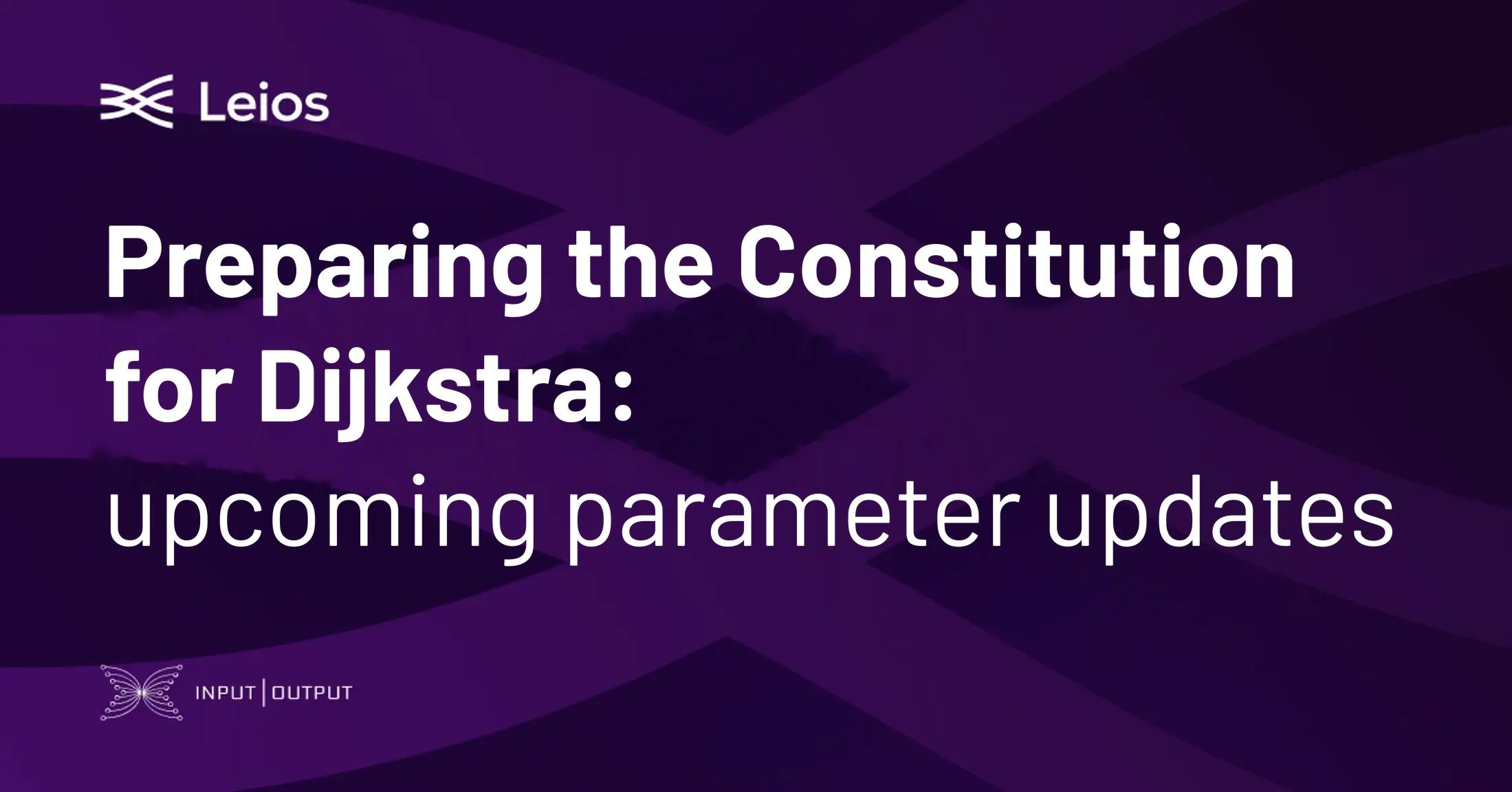
Preparing the Constitution for Dijkstra

Input Output Global
Global IO holding

Input Output outlined a small, purely technical Constitution update ahead of the Dijkstra era, adding the new protocol parameters introduced by the hard fork to the Guardrails so they remain governable from day one. The proposal is strictly limited to the new parameters and their Guardrail ranges, with no changes to tenets, roles, or thresholds. DReps would ratify the change and the Constitutional Committee confirm its constitutionality, with submission targeted before epoch 655.

Preparing the Constitution for Dijkstra

Why Intersect facilitates an election process to confirm a new Constitutional Committee

Intersect
Member based organization

Intersect is facilitating the election process for Cardano’s Constitutional Committee to fulfill a critical "unowned function" required by Section 3.2 of the Cardano Constitution. Because a fair election requires a structurally neutral administrator, Intersect has stepped in as a non-partisan steward rather than a participant, leveraging its established institutional knowledge in managing member-driven governance. This independent, non-commercial coordination ensures that the committee can be updated efficiently without stalling Cardano's overall governance framework.

community digest

Intersect Committee Election Results 2026

Intersect
Member based organization

The April 2026 Intersect Committee Elections have concluded. A total of 102 candidates ran for 37 seats across eight committees, yielding a 24.8% voter turnout (187 members casting 3,967 ballots). Following an internal review and an independent audit by Dquadrant that surfaced patterns in voting activity, Intersect proceeded with the announced results and announced upcoming measures to strengthen member verification. The next elections are slated for 2027.

community digest

DRep Participation in Focus: Power Is One Thing. Participation Is Another

Cardano Community
Individuals interested in or actively supporting the Cardano blockchain

This Roundtable examines DRep participation and accountability in Cardano governance. Discussants focused on overcoming inconsistency and "DRep fatigue" through better voting rationales and sustainable role definitions. The goal is a robust framework that keeps DReps active and accountable, ensuring long-term decentralized alignment.

Cardano Governance - A Debate on NCL & Constitutional Clarity

Cardano Community
Individuals interested in or actively supporting the Cardano blockchain

This session explores the Net Change Limit (NCL) and its role in Cardano’s treasury sustainability. Participants discussed constitutional interpretations regarding fund approval and the role of the Constitutional Committee, focusing on clarifying governance rules to ensure responsible spending and transparency within the ecosystem.

Building a 2026 Ecosystem Budget for Cardano

Intersect
Member based organization

A structured framework for the 2026 budget cycle proposes aligning treasury spending with Cardano Vision 2030 and measurable ecosystem KPIs. This Info Action asks DReps to validate a process featuring standardized templates and a minimum proposal size of 100,000 ada. The framework aims to ensure treasury resources are deployed responsibly while maintaining the long-term economic sustainability and transparency of the network.

community digest